
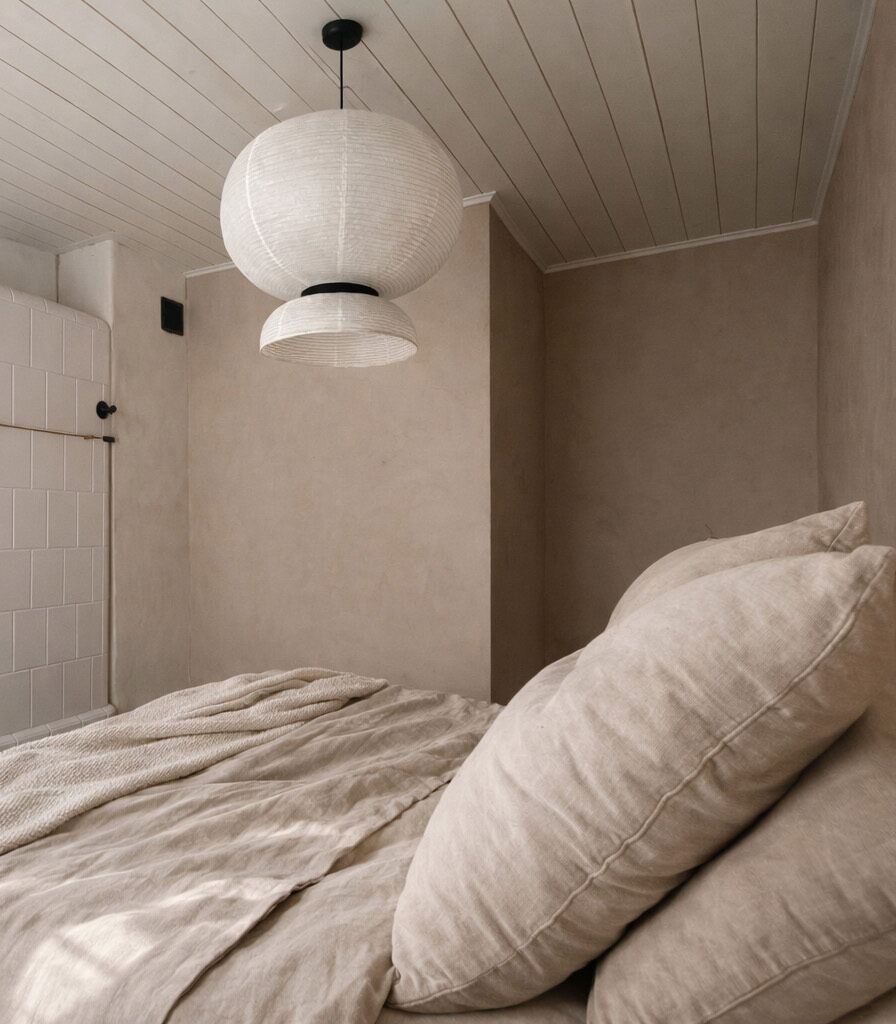
Across contemporary homes, heritage renovations, and architect-designed interiors, the demand for natural non-toxic paints continues to grow.
These days, homeowners, designers, and professional builders are looking much deeper than colour alone – focusing more on how the type of paint they use affects indoor air quality, wall performance, and long-term living comfort.
Experienced craftspeople know that the best natural non-toxic paints do more than simply cover a surface. They create breathable wall systems that regulate humidity, reduce harmful emissions, and age naturally in harmony with the building itself. Materials such as clay paint and limewash are increasingly valued not only for their environmental benefits, but also for their calm, mineral-rich aesthetic and compatibility with healthy interiors.
Unlike many conventional coatings – which typically rely on synthetic resins and chemical additives – natural paints are designed to work with the building fabric rather than sealing it behind an impermeable layer. The result is a more balanced, breathable interior environment that maintains greater material integrity over time – as in the UKU Mooste showroom, where we used a combination of clay and lime paint for a calming, tranquil, nature-inspired atmosphere.
Let’s look into non-toxic paints in a little more detail.
What Are Non-Toxic Paints? Why Choose Them?
Essentially, non-toxic paints are liquid coatings formulated with reduced or eliminated harmful chemicals, solvents, and synthetic emissions. In most cases, they contain low or zero levels of volatile organic compounds (VOCs), which are chemicals released into the air during and after application.
Natural organic paints are typically made from mineral and plant-based ingredients such as clay, lime, chalk, and natural pigments. Unlike the majority of synthetic paints, they avoid unnecessary additives while still maintaining strong performance and durability.
One of the primary reasons homeowners choose non-toxic wall paint is indoor air quality. Conventional synthetic coatings can continue releasing VOCs into living spaces long after application – affecting comfort, wellbeing, and overall health.
Natural non-toxic paint systems help minimise this issue – or can even eliminate it entirely – by using breathable, mineral-based ingredients that support healthier indoor environments (like in this city apartment in Taiwan). This is especially important in bedrooms, nurseries, and spaces occupied for long periods of time.
For families with young children seeking to design a more balanced home, non-toxic paint suitable for nursery spaces has become an increasingly important consideration. Breathable clay paint and limewash (sometimes simply called lime paint) are particularly sought-after, because they remain VOC-free while simultaneously helping to regulate moisture naturally within the wall structure itself.
The environmental impact of paint extends beyond the finished wall surface. Many conventional toxic paints rely on petrochemical ingredients, energy-intensive manufacturing, and synthetic plastics that are difficult to recycle or safely dispose of.
Meanwhile, natural non-toxic paints and toxic-free paints reduce this environmental burden considerably through simpler material composition and renewable mineral ingredients. Clay and lime products, for example, only require minimal processing while remaining fully compatible with breathable and traditional construction methods.
Key Features of the Best Non-Toxic Paints
The best non-toxic paints combine environmental responsibility with practical performance. Breathability, durability, repairability, and aesthetic quality all play a role in determining whether a clay paint or lime paint system performs successfully over time.
One of the defining characteristics of high-quality natural paint is its breathability. Breathable paints allow water vapour to move naturally through the wall system, reducing trapped moisture and helping maintain balanced indoor humidity levels.
This is particularly important in older or antiquated buildings (such as the Võru Catherine Church), buildings with solid-wall construction, and modern breathable homes where moisture management has a direct influence on the long-term performance of the structure.
Clay paint is especially effective in this respect. Because clay naturally absorbs and releases moisture depending on surrounding conditions, it helps create breathable walls that regulate humidity without needing to rely solely on mechanical ventilation.
Limewash also performs exceptionally well in moisture-prone environments, making it an excellent non-toxic anti-mould paint option for saunas and bathrooms, as well as kitchens, shower rooms, and utility spaces.
It’s important to remember that natural paints age very differently from synthetic coatings. Rather than forming a plastic film that will eventually crack or peel, lime and clay paints wear more organically – lending a beautifully textured, natural, timeworn effect – and can often be repaired locally without visible joins.
This makes natural non-toxic paint systems especially practical over the long term. Minor imperfections can be refreshed with additional layers or touch-ups rather than requiring complete removal. This is the exact technique we used when restoring Rõuge St. Mary’s Church, which was built in the 1730s and – thanks to careful application and expert knowledge – is now restored to its former glory.
While some synthetic, conventional coatings may initially appear more durable, many eventually fail because trapped moisture weakens the paint film from behind. Breathable mineral finishes avoid this problem by allowing the wall structure to dry naturally.
The visual character of natural paints is one of their greatest strengths. Unlike synthetic coatings that create flat, uniform surfaces, mineral paints interact softly with light and texture.
Clay paint creates a velvety matte finish, with an earthbound depth and subtle movement, while lime paints produce a softer, cloudy effect that evolves and seems to swirl naturally across the surface. In either scenario, these finishes look and feel architectural, tactile, and materially honest.
Depending on the system, brush, pigment, and application technique used, finishes can range from soft matte surfaces to more refined satin textures. This makes natural paints suitable for both minimalist contemporary interiors and expressive heritage environments.


Best Natural Non-Toxic Paints for Interior Walls
Interior wall surfaces benefit enormously from breathable, non-toxic interior paint systems that support comfort and indoor air quality.
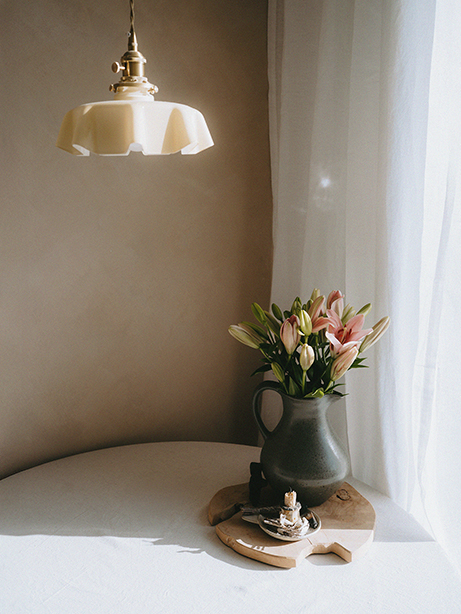
Clay paint is one of the most refined and effective natural non-toxic paint options available for interior walls. Made from clay, mineral pigments, and natural binders, it creates a breathable finish with excellent moisture-regulating properties.
Its soft matte appearance diffuses light gently across the room, helping create calm and comfortable spaces. Unlike many synthetic coatings, clay paint is free from harsh emissions while contributing positively to indoor air quality.
Because of its breathable nature, clay paint is especially well suited to bedrooms, living areas, studios, and nurseries where comfort and atmosphere matter most.
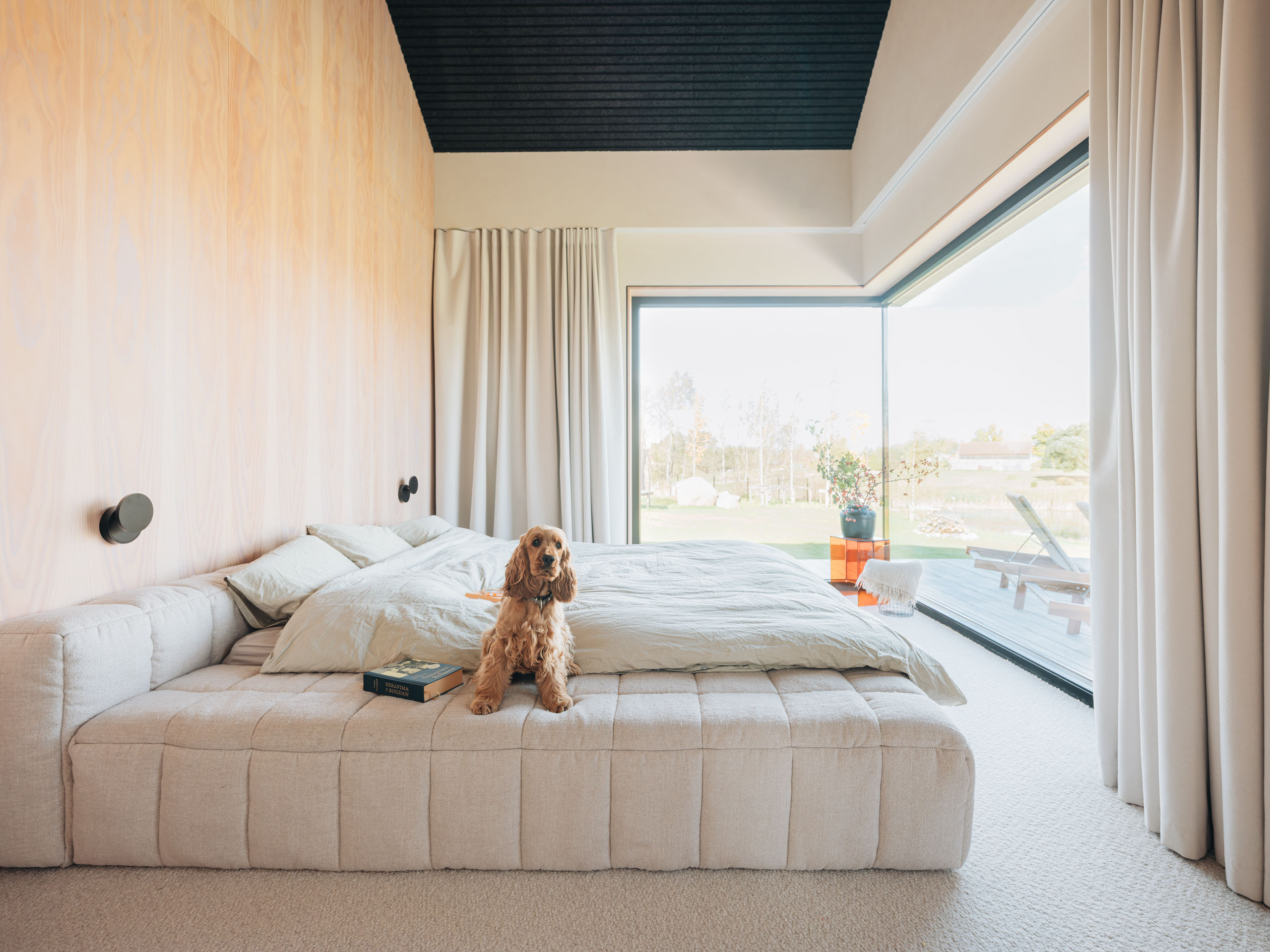
It also offers exceptional design flexibility. Natural pigments create grounded, earth-toned colours that shift subtly depending on surrounding light conditions; as in Nature Villa Poku, inspired by the unique landscape of Maidla. This gives interiors greater depth and warmth.
Limewash is another highly effective non-toxic wall paint system used across both contemporary and heritage projects. Made primarily from lime and water, it creates a breathable mineral surface that bonds directly with the substrate.
Limewash is valued by professionals for its:
- Natural durability
- Vapour permeability
- Anti-mould performance
- Timeless matte appearance
Its breathable qualities make it especially useful in kitchens, bathrooms, and older masonry buildings (such as Holdre Manor, in Valga County) where trapped moisture can become problematic over time.
Because lime paint bonds chemically with mineral surfaces, it creates a long-lasting finish that ages naturally rather than peeling in the same way as conventional paint films.
Best Non-Toxic Paints for Exterior and Outdoor Surfaces
Exterior applications require paint systems that can withstand weather exposure while remaining breathable.
For projects like this, lime-based coatings are often the preferred solution because they allow moisture to escape naturally from the wall structure while still providing surface protection. Breathable mineral finishes are particularly important on brick, stone, render, and heritage facades where impermeable coatings may cause long-term damage.
Non-toxic exterior paint systems based on lime are also more visually compatible with natural materials, creating softer finishes that sit comfortably within both traditional and modern architecture.
If you’re seeking breathable, VOC-free clay paint or limewash for interior or exterior projects, contact UKU for tailored product guidance and recommendations.
Best Natural Non-Toxic Paints: FAQs
VOC-free paint contains no measurable volatile organic compounds, while non-toxic paint or natural paints refer more broadly to products formulated without harmful emissions or hazardous additives.
Not necessarily. Some products marketed as “natural” may still contain additives or preservatives. It’s important to review certifications, ingredient composition, and VOC levels before choosing a paint.
Yes. Breathable mineral finishes such as lime paint can help reduce condensation and moisture build-up. (Clay paint may also be used in damp areas, provided the surface doesn’t come into direct contact with water.) This makes them highly effective as natural, non-toxic, anti-mould paint options for wet areas like bathrooms and saunas.
Natural paints can last for many years when correctly applied and maintained. Because they remain breathable and repairable, they often age more gracefully than synthetic coatings.
Non-toxic paint suppliers such as UKU offer breathable clay paints, limewash, pigments, and natural wall finishes. Handcrafted in Estonia using traditional methods, our products are designed for both interior and exterior projects. Contact us to learn more about suitable products, quantities, and application methods.
